
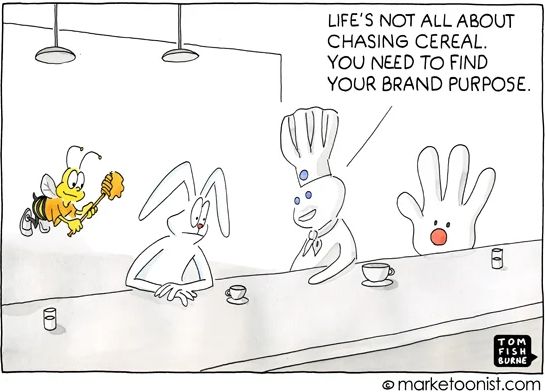
Brand Purpose seem to be one of those marketing trends (of course it is not only a marketing trend but as we speak in this context here I will reframe it as such) that is slowly fading away after really got traction and popularity slightly before Covid happened. The topics rise dates back to Simon Sinek’s book “It starts with why” from 2008. Out of that moment came a new narrative: business doesn’t just create value, it makes the world a better place. And we saw campaigns and programs come to live that everyone that works in marketing for sure knows quite well: Dove’s famous “Real Beauty” campaign for example was the #1 example of purposeful communication and both financially and also for the brand image very successful.
So why I am then even want to talk about purpose is going away if it was so super successful? Well, since then thing shifted a bit since that as big brands like for example Unilever are moving away from the trend. And I am calling it on purpose a “trend” because it has all the characteristics of a mid-term marketing trend. Also there was a lot of methodological criticism on studies that claimed that purpose is strongly linked to company success was only because only successful companies were actual in the roaster. As of today marketing has bigger issues to solve then brand purpose, so except for some sworn in missionaries the topic is slowly fading away. Rightly so? We find out…
A heated debate last year
A little while ago it all started with an podcast episode “Is Purpose Dead?” in Jim Stengel’s The CMO Podcast last May and the following digital discussions on the topic by strong positions pro and contra purpose. There are a few people involved so I give a quick overview. Jim Stengel himself is a very profound purpose advocate and published 2011 the book “Grow: How Ideals Power Growth and Profit at the World’s 50 Greatest Companies” that is basically a big shout out to purpose. The study was vigorously criticized by marketing’s top faces like Byron Sharp, Richard Shotton and Nick Asbury. Support for the purpose position comes from Callum Towler.
Jim Stengel’s Position: Purpose as a Growth Engine
Jim Stengel, the former CMO of Procter & Gamble and author of Grow, has long advocated that “ideals” are the primary drivers of business success. His core positions include:
- Growth through Higher Purpose: Stengel believes brands grow most effectively by serving a purpose beyond the functional benefits of their products. He argues that organizations creating experiences that improve lives will differentiate themselves and outperform the competition.
- The “Mature Phase” of Purpose: While acknowledging current skepticism and “lofty language” that fails to connect to value, Stengel does not believe purpose is dead. Instead, he frames the current era as a “more mature and more scrutinized phase” of the discipline.
- Commercial Success through Values: He cites his work with the peanut butter brand Jif as an early example of “purpose awakening,” where connecting the brand to the values of parents and children (such as supporting PTAs and schools) led to significant commercial results.
Nick Asbury’s Critique: Purpose as a “Fever Dream”
Nick Asbury views the brand purpose movement as a “strange fever dream” that is finally beginning to fade. His critique is built on several key arguments:
- The Motte-and-Bailey Fallacy: Asbury argues that purpose advocates use a rhetorical gambit. They occupy the “bailey” by making grand, controversial claims about social responsibility and “doing well by doing good” to gain attention. When challenged on the logic or ethics of these claims, they retreat to the “motte”—claiming purpose just means having a clear commercial “proposition” or “strategy,” which Asbury notes is a “wholly unremarkable” concept that has existed for decades.
- The Dishonesty of “Reason for Being”: Asbury contends it is dishonest for corporations to claim a social mission is the reason they exist. He argues that the ultimate purpose of a business is profit, and pretending otherwise leads to “tortuously reverse-engineered purpose statements” and “confused ethics”.
- Moral Grandstanding: He believes that when brands “sound the trumpet” about the good they do, the act is tainted by self-interest. He argues this “moral grandstanding” is counter-productive and that for-profit businesses should not leverage social issues to boost shareholder payouts.
- Blurring Vital Distinctions: Asbury warns that the purpose movement dangerously blurs the line between for-profit and non-profit entities. He argues these distinctions matter because they fundamentally change the incentive structures of organizations, and purpose “obscures all of it”.
Asbury’s Specific Critique of Stengel
Asbury is particularly critical of Stengel’s influence, noting that:
- Flawed Methodology: He points out that Stengel’s research in Grow was subjected to “clear-eyed scrutiny” by Professor Byron Sharp in 2011 and found to be “fundamentally flawed,” a critique Asbury claims Stengel has never addressed.
- Questionable Case Studies: Asbury questions Stengel’s Jif case study, asking if offering schools money in exchange for labels is truly “doing good” or simply a “corporate invasion” and marketing to children.
- Wilful Ignorance: Asbury suggests it is difficult to take the “purpose conversation” seriously when leaders like Stengel appear “wilfully unaware” of substantive, high-profile critiques that have existed for over 14 years.
What marketeer should take out of this?
To navigate the complex landscape of brand purpose, marketers should adopt a balanced approach that weighs the growth-oriented optimism of Jim Stengel against the rigorous, logic-based skepticism of Nick Asbury.
Recommendations for Marketers
- Ground Purpose in Commercial Reality: Avoid the “Motte-and-Bailey” fallacy described by Asbury, where brands oscillate between grand social claims and basic commercial goals. If you adopt a purpose, ensure it is fundamentally commercial and grounded in “product truth”—the actual joy or utility your product provides.
- Prioritize Internal Over External Impact: While Stengel champions purpose as a external growth engine, the sources suggest its most measurable benefits may be internal. Focus on using purpose to drive employee satisfaction, retention, and innovation, which research indicates can be significantly higher in purpose-driven firms.
- The “Cost” Test: Follow the principle that “a principle isn’t a principle until it costs you something”. If your brand’s commitment to a cause vanishes as soon as it impacts the bottom line, it will be viewed as dishonest PR rather than authentic purpose.
- Strategic Choice, Not a Prerequisite: Do not feel obligated to adopt a social “cause.” Traditional marketing—focusing on price, placement, and product quality—remains highly effective. Purpose should be a strategic choice used to differentiate in specific categories, rather than a universal requirement for all brands.
- Avoid Moral Grandstanding: Be cautious about “sounding the trumpet” regarding your good deeds. Asbury warns that moral grandstanding can look like self-interest and lead to “tortuously reverse-engineered” statements that alienate savvy consumers.
Conclusion
The debate between Stengel and Asbury reveals that while purpose can be a “growth engine” when done with maturity and scrutiny, it is often plagued by “confused ethics” and “marketing speak”. From my own perspective outside the sources, the most successful future brands will likely move toward “radical transparency”—being honest about their profit-making nature while excelling at their core service—rather than adopting “lofty language” that lacks real-world substance.
Ultimately, as the sources note, the “vibe has conclusively shifted”. We are likely witnessing the end of a “prolonged fever dream,” as brand purpose appears to be a trend that is slowly but certainly fading away in favor of more grounded, commercially-focused strategies
A distinct contra argument against purpose
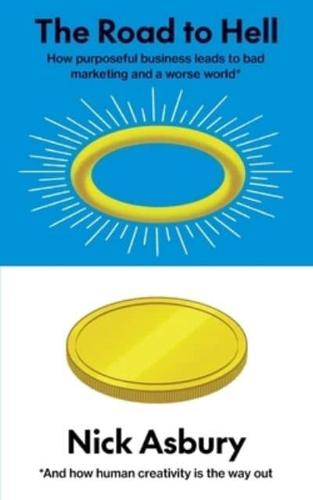
If you like to dig deeper into to counter arguments on brand purpose you should read the book from Nick Asbury “The road to hell” – I can highly recommend doing so. It serves as a rigorous critique of the brand purpose movement, which he characterizes as a “strange fever dream” that is finally beginning to fade. In the text, he examines the influence of “purpose pioneers” like Simon Sinek and Jim Stengel, arguing that their foundational claims often rely on flawed methodologies and “tortuously reverse-engineered” statements. A core theme of his work is the “Motte-and-Bailey” fallacy, wherein brands use grand, attention-grabbing social claims (the bailey) but retreat to unremarkable commercial justifications (the motte) when their logic is challenged. Ultimately, Asbury contends that this movement leads to “confused ethics” and “moral grandstanding,” asserting that it is dishonest for for-profit corporations to claim a social mission is their primary “reason for being” when their fundamental goal remains profit
Leave a Reply