

Cannes Lions has been reframed the last two years as a “culture lab” rather than an advertising festival. Creators, athletes and niche communities now get as much stage time as creative directors. Every agency deck we have seen since has the same slide somewhere in the middle: stop targeting demographics, start “tapping into culture.” The claim is bold and simple: brands that show up inside a subculture, rather than shouting at it from outside, win loyalty that demographic targeting never could. We have heard versions of this claim before, about purpose, about Web3 communities, about the metaverse. So we wanted to look closer at what cultural marketing actually is, where it comes from, and whether the claim holds up.
What is cultural marketing?
Cultural marketing means building a brand’s meaning around the values, codes and rituals of a specific cultural group instead of a demographic segment. Age, income and gender tell you little about what someone believes in. A shared subculture, skateboarding, gaming, K-pop fandoms, wellness tribes, tells you a lot.
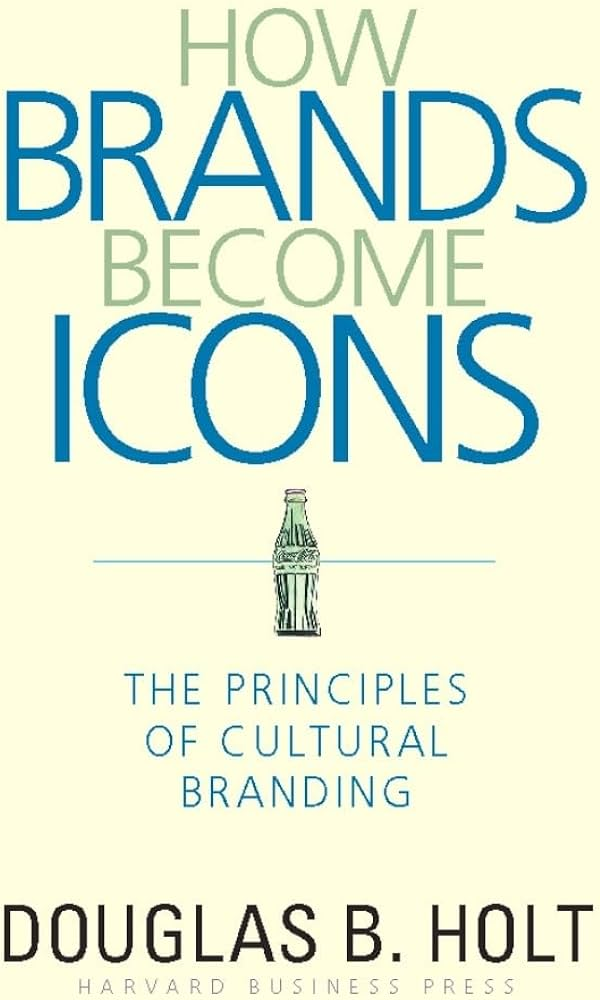
The theory behind this is not new. Douglas Holt’s concept of cultural branding, laid out in “How Brands Become Icons,” argues that the strongest brands act as myths that resolve tensions in society, and that subcultures work as a credible source for those myths because they prove an ideology already exists in the world (Douglas Holt). Before Holt formalized it, the industry ran on “cool hunting,” a term popularized by Malcolm Gladwell in the late 1990s: agencies sent scouts into skate parks and clubs to spot what was cool before it went mainstream, then fed it back into campaigns for brands that had nothing to do with that scene originally.
So the mechanism is old. What changed is the speed and visibility of subcultures. TikTok and Instagram turned niche aesthetics into public spectacles that update weekly, not yearly. “Main Character Energy,” the idea that everyone romanticizes their own life like a movie, is a good example: a genuine cultural mood that agencies noticed and are now packaging into briefs. When culture moves this fast, every micro-trend looks like an opportunity, and every agency wants a slide about it.
Where it goes wrong
The uncomfortable part of cultural marketing is the gap between belonging to a culture and borrowing from it for a campaign. Consumers notice the difference, and the record of brands getting it wrong is long.
Dolce & Gabbana lost an estimated 500 million dollars in China after a 2018 campaign showed a model struggling to eat Italian food with chopsticks, framed with a patronizing voiceover. Swiss watchmaker Swatch pulled an ad in 2025 after it showed a model pulling at the corners of his eyes, a gesture read as a racial caricature, with the stock dropping nearly three percent in a day. Both were meant to look culturally attuned and landed as the opposite. Research backs up why this keeps happening: a 2020 survey found 69 percent of consumers say they would boycott a brand they see as culturally insensitive, and academic work on cultural appropriation shows the backlash is driven by a simple test, whether the brand used the culture with context and permission or without it.
Bud Light’s 2023 collaboration with Dylan Mulvaney is the sharper lesson, because the campaign itself was not offensive by most standards, it was a single sponsored can sent to one creator. What followed was a sustained boycott that cut sales by 25 to 30 percent for well over a year and let Michelob Ultra and Modelo overtake Bud Light in the US market. The lesson was not about taste. It was that light beer drinkers did not want to be pulled into a values debate at all, whichever side that debate came from.
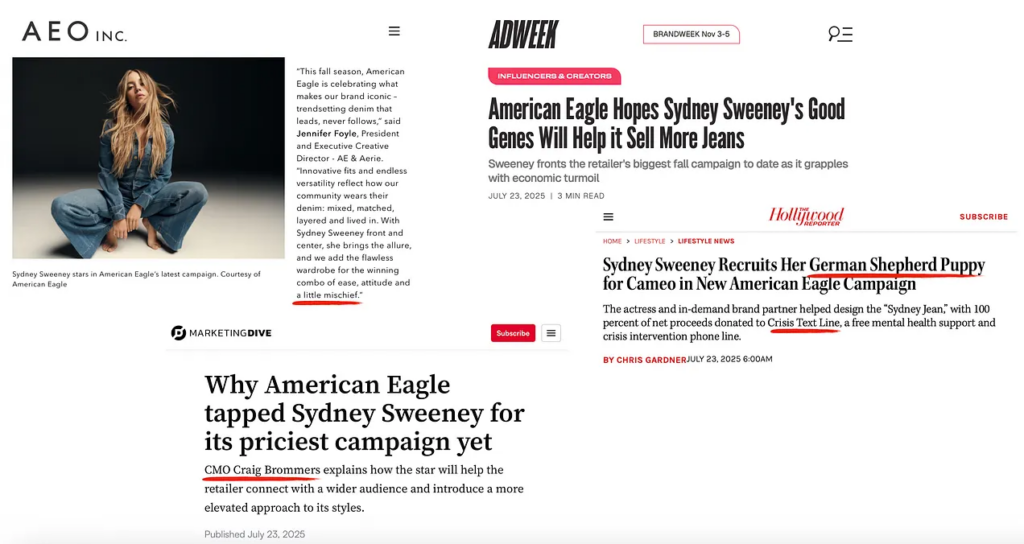
The American Eagle campaign with Sydney Sweeney in 2025 adds a strange twist to this. Nick Asbury traced the timeline in detail and found that the “Gen Z backlash” widely reported in the press did not come from a broad youth response at all. It came from a small group of professional commentators, academics and influencers, mostly a generation older than Gen Z, whose posts were then quoted by media as evidence of a groundswell that never existed on the ground (Nick Asbury). Sales and stock reaction stayed positive throughout. So the campaign that was supposedly a cultural marketing disaster may in fact show the opposite: that a manufactured discourse about culture can dominate headlines while barely touching the brand’s actual customers.
Our take
We see cultural marketing as a trend with the same shape as brand purpose: a genuinely useful idea at its core, wrapped in more hype than the evidence supports. Both are vital for agencies right now, not because clients are proven to grow faster from them, but because Cannes and the trade press reward the work with awards, and awards win the next pitch. That incentive alone keeps a trend alive well past the point where its actual return on investment gets checked.

The core problem is scale. A subculture is a subculture because it is small and specific. Byron Sharp’s research on how brands actually grow keeps making the same point: growth comes from reaching light and non-buyers broadly, not from going deeper with people who already like you (Byron Sharp). A campaign that nails the codes of one niche community will rarely move a P&L, and the more precisely a brand speaks one subculture’s language, the more it risks sounding foreign, or worse, opportunistic, to everyone standing outside it. The Bud Light case shows what that risk looks like when it lands badly. The American Eagle case shows the reverse: sometimes the loudest “cultural backlash” is a discourse problem, not a customer problem, and a brand that keeps its nerve can ride it out.
An there is also the argument about the relevant differentiation: As many brands now enter this territory and claiming their slice of the different sub-cultures available out there, they 1) first of all get less and harder to find when in the hunt for untapped territory and 2) when to much brands tap in one sub-culture there is no clear associations with either one of them. There is no clear differentiation in their doing and this is a fundamental deficit that makes it hard for every marketing effectiveness argumentation.
Our advice: treat cultural relevance as a lens for sharper creative work, not as a growth strategy on its own. If a subculture connection is not close to something your brand has genuinely earned over time, of course it will read as extraction rather than participation. Awards juries may reward the attempt. Your P&L will judge the substance.
To sum up: cultural marketing is legitimate as a creative discipline and overhyped as a growth lever. Evaluate any subculture-led campaign against your actual customer base first, not against what won at Cannes.
- Legit or overvalued: 3/5
- FoMo Factor: 4/5