
With the rise of AI and the hype affecting many domains and industries also marketing got transformational impulsed fueled through generative AI tools that allow faster text, image and video generation then ever before. Modern marketeers used the new tools from day one to get better and faster in their delivery and to scale existing activities with a huge leverage. In the early 2025 formed new term “vibe marketing” this new style and mood of doing marketing has been coined. So lets dive deeper into the topic.
Vibe what?
The term derives from the new concept of vibe coding. Vibe Coding was coined in early 2025 by Andrej Karpathy — a programming style in which developers prompt large-language models (LLMs) to generate code from natural language instructions, rather than writing the code manually themselves. Soon after, the conceptual leap was made: if AI can “code by vibe,” maybe marketing could be “marketed by vibe.” By spring 2025, early-adopter marketers and entrepreneurs began using the phrase “vibe marketing” to describe what happens when you replace many conventional marketing roles with AI-driven workflows.
What vibe marketing means
Vibe Marketing means using generative-AI tools, automation, and prompt-first workflows to create, deploy and scale marketing material — often with a minimal team (or even solo founder). The emphasis shifts from manual production to speed, experimentation and emotional/cultural resonance. Rather than building big teams for copywriting, design, video editing, data analytics, ad ops, scheduling, etc., vibe marketing lets one person (or a small core team) manage everything via AI-powered tooling.
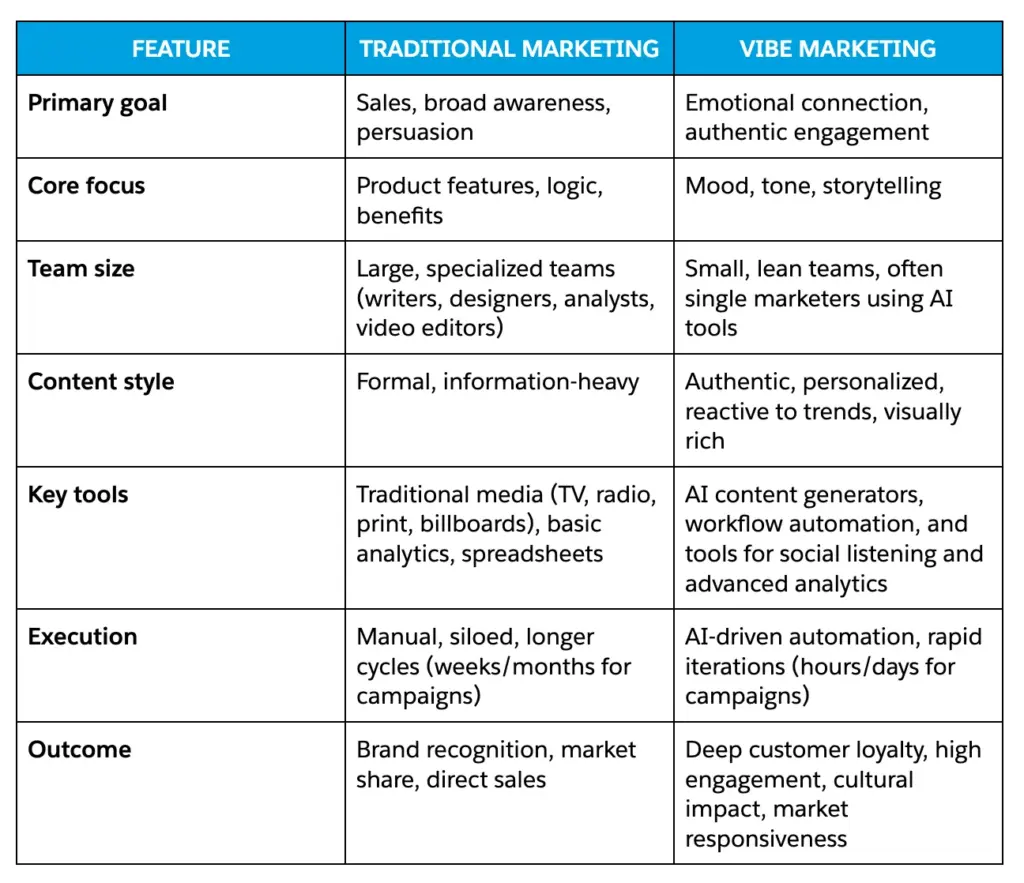
In other words: vibe marketing adapts the vibe-coding philosophy — human sets direction, AI does heavy lifting — to the realm of brand, content and creative communication.
How it works and potential risks
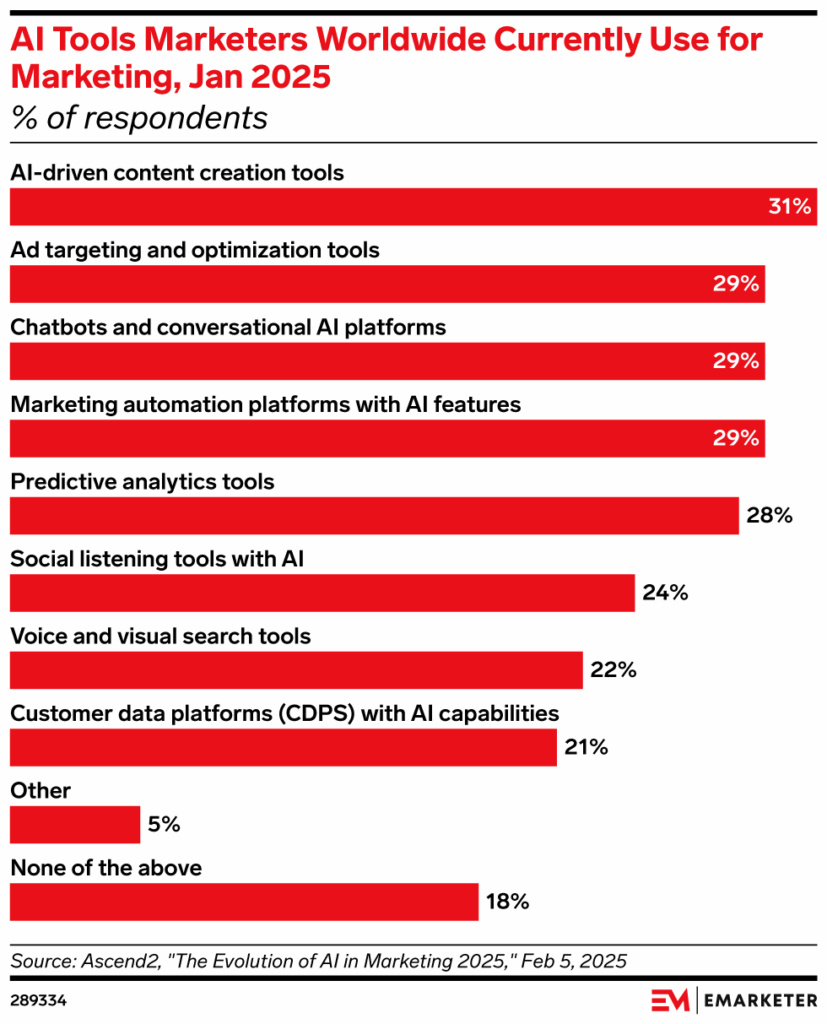
Some of the emerging content about vibe marketing suggests it’s especially appealing to solopreneurs, founders of small startups, or lean teams — basically anyone who wants enterprise-level marketing output without enterprise-level budgets.
Some of the characteristics of these early vibe marketeers:
- Their mindset values speed, iteration, cultural relevance, and emotional clarity over traditional marketing polish or layering of processes.
- They treat creative assets (copy, visuals, ads, social posts) as modular — swapping in variations, testing, iterating fast.
- They use LLMs and AI not just for writing, but for workflow orchestration — creating dashboards, generating content calendars, automating publishing, analyzing performance.
Because vibe marketing leans heavily on AI and automation, it also brings potential drawbacks:
- Risk of bland or generic output — when everyone uses similar AI tools and prompts, content can start feeling the same across brands.
- Loss of craftsmanship or depth — automation may miss nuance, creativity, or authenticity that human specialists bring, especially for brand voice or complex positioning.
- Dependence on AI tools — if underlying AI tools change, degrade or vanish, the entire marketing stack may break or lose quality.
- Lack of long-term strategy — focusing on rapid execution and iteration may de-prioritize deeper brand-building, narrative, or community — turning brand identity into a set of interchangeable “vibes.”
Is vibe marketing the new performance marketing or growth hacking/marketing?
Vibe marketing seem for many just like the next digital infused marketing trend that is booming at the moment and then fading out again. With the rise of digital marketing and all the platforms and possibilities marketing shifted fundamentally and all the people that work right now in a old-school media company can tell. AI has again this transformative power that can cause another wave of dramatically shifts in the marketing sphere. So I definitely think that the AI infused marketing tooling and process are here to stay – whether they are now call vibe marketing or not.
Future outlook
Vibe marketing represents a paradigm shift: marketing being democratized, accelerated, and stripped to its emotional core. For small teams, startups, or creators, it opens the door to compete on scale and speed — something previously reserved for big agencies and large budgets.
At the same time, it signals that marketing is becoming less about mastery of craft (specialist copywriters, designers, videographers) and more about prompting, iteration, data-driven feedback loops, and aesthetic/mental-model fluency.
In an age of AI-powered tools, the competitive advantage may go to those who can think in vibe, iterate quickly, and stay culturally tuned — not necessarily to those with the biggest budget or the slickest agency decks.
Leave a Reply